20% OFF SALE PRICES WITH CODE 20OFF – ENDS TONIGHT!
20% OFF SALE PRICES WITH CODE 20OFF – ENDS TONIGHT!




 https://www.hopesgrovenurseries.co.uk/wp-content/uploads/2024/06/philadelphus-belle-etoile-.jpg
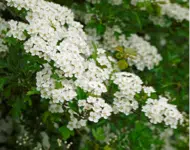
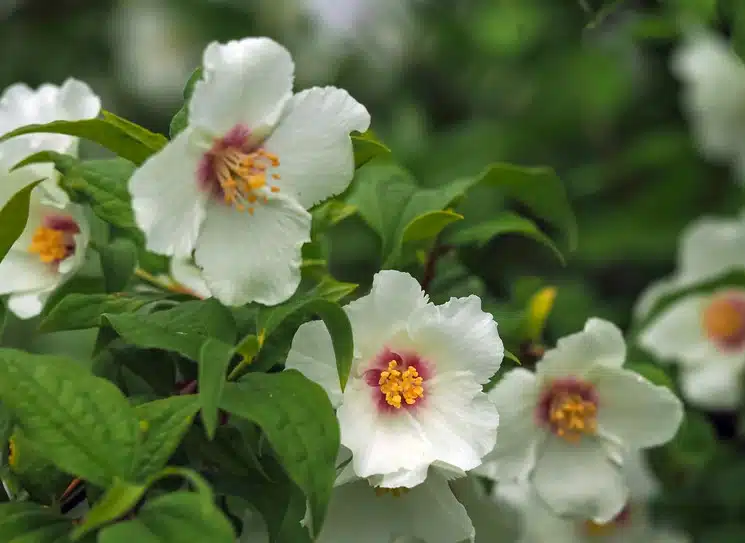
PHILADELPHUS BELLE ETOILE FLOWER DETAIL
https://www.hopesgrovenurseries.co.uk/wp-content/uploads/2024/06/philadelphus-belle-etoile-.jpg
PHILADELPHUS BELLE ETOILE FLOWER DETAIL
In my last blog I wrote about the importance of woody plants in the colder months of the year, mentioning how their roots drain the ground and allow small bulbs and woodlanders to thrive in the wet winters we’re tending to get now. The overhead canopy of branches offers frost-breaking protection against the worst of the weather, even when the branches are bare. Better still, the taller woody shrubs and trees add perspective and they cast light and shade patterns that change as the sun moves through the sky. This magic lantern effect adds so much artistry to the garden.
I recommended some earlier flowering woody plants in that piece and stressed how important they are now that out climate is becoming more erratic. We are getting much heavier bursts of rainfall in recent times, but we are also getting hotter, drier summers. The summer of 2021 led to drought conditions and perennial garden plants shrivelled up to nothing in most areas of the country. However, the perennials shaded from the heat of the sun by taller woody plants in my own garden did not suffer as badly. They were shaded from the hottest sunlight by my plant parasols.
Early-flowering woody plants wouldn’t add much to later borders however, because the understorey planting would still be bare when they flowered. It’s far better to use summer-flowering or autumn-flowering shrubs in these areas, but they must be chosen carefully so that they don’t overpower the perennials in the border.
Domed Flowers
Woody plants with domed flowers slot into summer and autumn borders really well and most of them have pastel-pink or white flowers. High on my lots of suitable shade casters for planting would be those ornamental elders with dark foliage and pale-pink flowers. You may think elders are rather boring, having seen the white flowers of S.nigra in the hedgerow, but they are tough and long-lived plants that provide very pollinator friendly white flowers in June. They make great cordial, if you can pick them early enough in fine weather. The scent should have a fresh almost lemony tang. Should it turn dull and wet, the flowers will smell ‘catty’ and unpleasant and this is deliberate ploy because musty flowers attract flies including hoverflies. Your cordial will suffer though!
Once pollinated black berries appear to feed the birds. Dormice and bank voles also eat the berries and the flowers and many moth caterpillars feed on elder foliage. They include the white-spotted pug, swallowtail, dot moth and buff ermine. I have one or two common elders on the garden edges, purely for wildlife. In the old days, elders were said to repel evil witches!
However, the elders you need for your summer border have ornamental black, lacy foliage. The best two are Sambucus ‘Black Lace’ and ‘Black Beauty’. ‘Black Lace’ is my favourite so far, because it has more-divided, blacker foliage than ‘Black Beauty’ and paler pink flowers that stand out beautifully against the sultry foliage. There’s an upright form called ‘Black Tower’ as well
Sambucus nigra f. porphyrophylla ‘Black Lace’, sometimes labelled ‘Eva’, and ‘Black Beauty’, or ‘Gerda’, came from East Malling Research Station in the mid-1990s. A plant breeder named Ken Tobutt was looking at gene flow in the diverse genus of Sambucus and planted out a field of variable seedlings from deliberate crosses. When the experiment finished, Ken Tobutt thought these two were too lovely to discard and thankfully rescued them. Ken went on to breed Prunus ‘Starlight’ with Dr Radovan Boskovic and this ornamental blush-white cherry was awarded the RHS Chelsea Plant of the Year in 2024. Ken also raised the Ballerina strain of columnar apples for smaller gardens. The Ballerinas do not need pruning.
The sultry foliage of ‘Black Lace’ and ‘Black Beauty’ is a very good foil for paler flower, so it will highlight the white Japanese anemone ‘Honorine Jobert’ or pale-spired veronicastrums wonderfully well. Elders are part of the viburnum family and the summer-flowering V. plicatum f. tomentosum ‘Kilimanjaro Sunrise’ was another winner of the RHS Chelsea Plant of the Year, 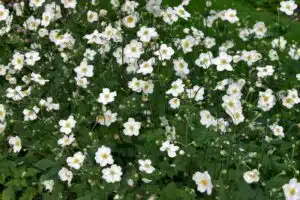 back in 2015. I like the way that forms of V. plicatum arrange their branches in tiers so you can really appreciate the flowerheads and berries. This one has a more upright habit and the white flowers take on a pink flush that darkens to warm-red and then deep-red berries appear and then turn back. This will reach 12 feet after twenty years in good conditions. Remove any shoots that rise upwards strongly when dormant.
You’ll also get the same domed flower arrangement with hydrangeas. One of the easiest and toughest, and perfectly capable of doing well despite climate change, is definitely Hydrangea arborescens ‘Annabelle’. This native of Eastern America is found naturally in a wide area from Louisiana down to Florida and northwards to Iowa. Plants that are found over a wide area are tolerant of different conditions. It’s normally found in damper areas of woodland and it’s extremely hardy and drought tolerant. You can shear it back in late autumn, along with your perennials. It will be more vigorous on damper soil. H. arborescens has been grown here for almost 300 years, having been introduced into Britain in 1736 by Peter Collinson (1694-1768). He was a major patron of John Bartram (1699-1777), a Quaker usually referred to as the “father of American botany”.

The spectacular ‘Annabelle’ was discovered growing wild near Anna in Ohio, hence the name. Launched in the mid-1970s by the Gulf Stream Nursery, it is now widely available throughout the world and it has spawned a lot of different Annabelles. The original has a mass of flat-headed white flowers in July, but the green veining on the so-called four petals (which are in fact long-lasting bracts) prevents ‘Annabelle’ from looking brash under summer sun. Although there are no large sterile flowers, to give that fragile lacecap look, ‘Annabelle’ has poise and balance and will offer a strong presence for more than six months. The green buds open to cream-white and then turn green and fade beautifully, a trait of many hydrangeas. If you want to enjoy winter seed heads, place ‘Annabelle’ in an open position where they can catch the frost and glimmer in the light.
More Summer-flowering Shrubs that also offer Scent
Mock orange, or Philadelphus, has a slightly misleading name because the scent from the flowers is definitely lemon-citrus rather than orange. It’s the white flowers that look like orange blossom. That’s where the name comes from. The flowers coincide with roses and I can remember a glorious June evening at the National Trusts’ Hidcote Manor Garden. The Philadelphus and roses were at their supreme best and, as the light faded the philadelphus flowers shone in the gloaming. I’ve been freeze-framing that evening ever since.
You do have to be selective because you’re after great flowers and a shrubby presence that will reach up to ten feet in height over time. And philadelphus do take their time to get going. They also flower on new wood, so you have to lightly prune them after flowering by removing one third of the length of the old wood stem by stem. If you’ve got a very mature shrub, that looks overcrowded, remove one-third of the oldest stems (with more gnarled looking wood) near the base. You’ll need a pruning saw for this.
The perfect candidate for a summer border is ‘Belle Etoile’ because the four-petalled flowers open wide enough to reveal a plummy centre and orange boss of stamens. These flowers never look stark in summer sun. It will make modest roundels, or a loose hedge, and if you’re aiming to make a sunscreen it must be placed on the southern edge of your planting. The scent intensifies in the evening.
Some lilacs also offer a lily-inspired scent that’s strengthens as the light fades and evening descends. Go for the smaller-flowered syringas rather than the commonly grown showy tree lilacs. Although these tall lilacs with enormous flowers are great for flower arranging you barely detect their scent in the garden. The Korean lilac, Syringa meyeri ‘Palibin’, produces lilac-pink delicate heads of lily-scented flowers in early summer. It’s easy to grow and mostly all you need to do is remove the spent flowers on this slow-growing shrub. The foliage holds its own, being a mid-green

If it’s a very sunny border the choice buddleia ‘Lochinch’ will also slot in well and this one is more compact and it hangs on to its foliage during winter. The soft violet-blue flowers, which display dazzling orange eyes, are sweetly scented and modestly sized. This hybrid arrived by chance in the 1940s in the garden of Lochinch Castle near Stranraer in Scotland, now part of the Castle Kennedy Estate owned by the Earl and Countess of Stair. The 75-acre garden benefits from the Gulf Stream and this hybrid is thought to be a cross between the most commonly grown one, Buddleja davidii and Buddleja fallowiana.
Buddleja davidii is a far larger shrub with far larger flowers, but it does well at the back of a border and the grey foliage tones well with pinks and purples. The darkest is ‘Black Knight’ and, although it’s an older one, it still kept its AGM in the RHS Trail held at Wisley between 2008 and 2010 because nothing else rivals the depth of colour. Deadheading produces a succession of flowers, for those butterflies and hummingbird-hawk moths. It also prevents unwanted seedlings. Keep them compact by cutting them back by half and this can be done in October in warmer places. I leave mine until March here ( because we are very cold) and, again, it’s a pruning saw job. You could equally grow the vivid-pink ‘Pink Delight’ and ‘Royal Red’.
They’ll all please the butterflies and this Chinese native, B. davidii, is the best plant for British butterflies. It’s visited by 22 species. I grow a viticella clematis through mine, although ‘Perle d’Azur’ is a lilac colour and the large buddleias it’s scrambling through is also mauve. Given my chance again, I’d go for the dark-purple ‘Étoile Violette’. But that’s gardening folks. A learning curve – if ever there was one.

Looking to spruce up your garden this year and need some new ideas? Discover our predictions for the top 2026 gardening trends in the UK below – set to focus on sustainability, smarter use of space, and creating gardens that support both people and wildlife. Top 5 Biggest Gardening Trends For 2026 1. Native planting:…
I’m a lifelong organic gardener and, I always say, it’s for all the wrong reasons. I grew up in the early, cash-strapped 1950s, when gardens were not exposed to a barrage of chemicals. There weren’t many products to buy, but most couldn’t afford them anyway because the household budget was strained. My organic mentor was…
As we creep towards the shortest day a certain sort of magic descends. Low light slants through the garden and picks up all the detail of line, texture and silhouette. I noticed this many years ago when I gardened in Hook Norton on Oxfordshire. All the older gardens had the same sturdy giraffe-like cooking apple…