***20% OFF SALE PRICES WITH CODE MARCH2026 – ENDS TONIGHT!***
***20% OFF SALE PRICES WITH CODE MARCH2026 – ENDS TONIGHT!***




 https://www.hopesgrovenurseries.co.uk/wp-content/uploads/2026/01/beech-aphid-shutterstock_2312005069-750x500.jpg
I’m a lifelong organic gardener and, I always say, it’s for all the wrong reasons. I grew up in the early, cash-strapped 1950s, when gardens were not exposed to a barrage of chemicals. There weren’t many products to buy, but most couldn’t afford them anyway because the household budget was strained. My organic mentor was my paternal grandmother Lucy Elizabeth Hardy and she was born in 1881. She was keen on plants, having had a three-acre garden in Beaconsfield in the 1920s.
Grandmother and I shared the same time clock, for we were both early birds at our most energetic as the sun broke through. We were up with the lark and on fine days we gardened. On less pleasant days we cooked. The rest of my family, including my twin brother, woke later so I was entertained by my grandmother so that the rest of the family could sleep on.
Grandmother had learnt to garden from her father and she passed it straight down to me. I revelled in the one-to-one attention, because twins always have to share. She gardened organically, just like her father before her, and this was the norm. Organic gardening is not new-fangled. It was common practice for hundreds of years. Problems were dealt with using hands-on methods when needed.
At other times, nothing was done because our ancestors knew that aphids on the roses made good food for fledgling birds. Standing back and waiting for nature to intervene is a large part of chemical-free gardening. You’re not in control. Nature is. You don’t need to intervene.
I never thought much about being organic and I didn’t realise I was in the minority until the late 1990s. The penny dropped after I was asked to participate in a radio show called Dig It. It was the usual scenario. Listeners phoned in with questions and you tried to sort the problem out for them. There were four of us, but I was the only woman. I got to work with three different chaps and discuss sooty mould, mildew, blackspot, potato scab, potato blight, and sickly lavender. The chaps got to go first and the answer from all three was always the same. Go down to the garden centre and buy some expensive powder or solution. I could feel the steam coming out of headphones.
I gave hands on gardening tips, involving no chemicals at all. After six weeks the producer told me that I had a wonderful radio voice. However, no one was interested in organic solutions just quick fixes. And I was sacked!! It spurred me on to write my first ecological book The Natural Gardener. It was about my garden in Hook Norton and the premise was simple. You don’t need to use chemicals in order to have a lovely garden. The book was published in 2004 and won the GMG award for Practical Book of the Year.
The reason it had taken me six years to write about my abundant and chemical-free garden was simple. I had no idea why my garden was healthy, so I spent many years observing the creatures in my food webs. I came to the conclusion that the lower orders underpin everything else. The humble aphid (and we WILL get on to the beech aphid soon I promise) sustained bird life because most fledgling birds need live wriggly things in the first weeks of life. I watched a constant stream of blue tits collecting grubs and aphids from the ancient apple tree in the garden.
The average blue tit brood needs 10.000 live insects and grubs to raise their young and they may repeat the whole process later in the year. The reason bird populations have plummeted since the 1970s, is the dearth of insects and that’s down to the wide use of pesticides by gardeners and farmers. A recent Guardian article (by Helena Horton) states that ‘farmland bird populations have fallen by about 62% over the long term and 11% in the short term, with harsher declines for farmland specialist birds than generalists. The turtle dove, grey partridge and the tree sparrow have suffered.
Chemical fixes can exacerbate problems. Take the Fruit Tree Red Spider Mite or Panonychus ulmi. This mite was not regarded as a pest before 1923. By the 1930s it had become a serious orchard pest in Kent’s orchards. When the problem escalated, stronger treatments were concocted and by the 1930s nearly a hundred tar washes were available.
East Malling Research Station in Kent decided to find out what was going on. In 1945 scientists began to observe the fruit tree red spider mite in untreated orchards. They identified no fewer that 45 predators, including several of the usual suspects such as ladybirds, hoverfly, anthocorid bugs, nabid bugs, lacewing larva and a small rove beetle. They also discovered that several species of capsid bug and one species of thrip also fed on this mite. More surprisingly, nine species of mite were also found to predate the fruit tree red spider mite. In other words, plenty of things fed on this mite and that kept numbers down if the status quo was observed.
East Malling went on to look at apple trees in orchards treated with winter tar washes. They found much higher numbers of the Fruit Tree Red Sider Mite, but very few predators. In other words, the tar wash was making infestations worse because it was killing off the predators. Despite East Malling’s research, winter tar washes weren’t banned until 2001, when the tar content was found to affect human health.
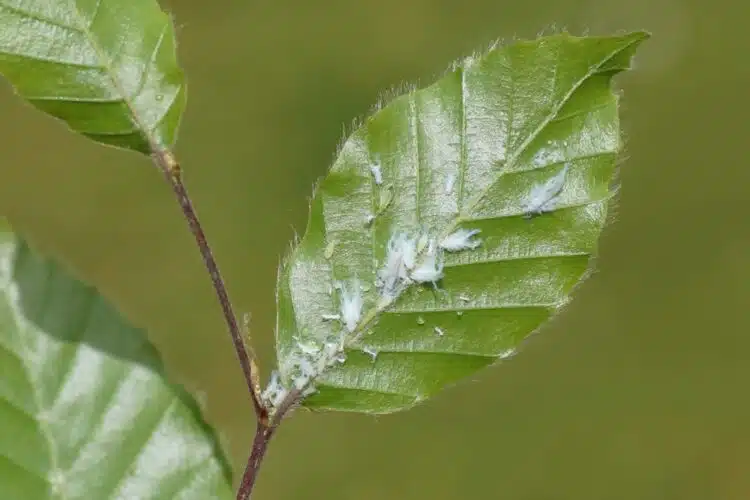
This crux of the problem is pesticides are not selective. They kill across the board, so when you go to zap that woolly beech aphid, Phyllaphis fagi, you’ll also be zapping lots of soft-bodied creatures and many of them will be natural predators. That’ll mean that you’ll end up getting more of them because there are no creatures left to regulate them.
It’s all down to life cycles. Aphids reproduce quickly, producing 40 generations per year in ideal conditions. They don’t have to breed. A process called parthenogenesis allows them to produce babies on their own. These babies are exact clones of the mother. If the mother aphid has survived the pesticide, it might well be resistant, or partly resistant, to that chemical. This resistance is passed straight on and, before long, you’ll have speeded up evolution and developed your own super race. Another research station, Rothamsted, researched this.
It wouldn’t be a problem if your predators, such as your spiders, ladybirds and beetles, could reproduce at the same rate as the aphids. However, spiders normally produce one generation per year. The 7-spot ladybird produces one generation per year as well and the juveniles don’t mate until their second year. Knocking the predators out allows the aphids to proliferate for much of the year.
I used to work with aphids when I had a lowly post at the now-defunct National Vegetable Research Station at Wellesbourne in Warwickshire. We studied viruses and some are transmitted from plant to plant by aphids placing their stylets, or feeding tubes, into the soft plant material. My job was to look down a microscope and tickle their back ends until they removed their stylets, before lifting them up and moving them from an infected plant to a host plant. Many a session ended up with lots on their backs – minus their stylets. They’re delicate beasts and rubbing them through with your fingers renders them useless.
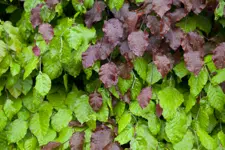
Our way of keeping a ready supply of aphids came as a real shock to me. I was told to spray them once with a non-systemic pesticide and give them two weeks under netting. It never failed: we never ran out of aphids. Not once. So, when I was faced by a major outbreak of woolly beech aphid in my Hook Norton in the late 1990s, I had no intention of spraying the beech hedge on the eastern boundary of the garden, despite it being dusted with unsightly white aphids.
A visit to the village pub told me I wasn’t alone. The bar was alive with discussion and the word knapsack sprayer bounced off the walls. My outbreak, untreated of course, was cleared up by lots of sparrows and other garden birds and never seen again – although I did move in 2005. The knapsack brigade had to spray several times.
Aphids in general cause huge panic among gardeners, because they think the blighters are going to infest the entire garden. However, aphids are species specific. They are not locusts. There are 500 species in Britain, according to the RHS website. The scary lupin aphid, a large grey American alien, only attacks lupins. Even the most ubiquitous green peach and potato aphid, Myzus persicae, will only feed on certain families. They are cucurbits, solanums, brassicas, daisies and chenopodium.
If you’re suffering from woolly beech aphid you’ll know, because they are rather like feathery whitefly. Eggs get laid around the buds and in crevices in the bark in autumn. The eggs hatch in the following spring, just as the new foliage appears. At this stage the aphids are flightless, but in late summer some develop wings and leave to lay eggs somewhere else.
The natural world is dynamic. Populations rise and then fall and there can be several years between spikes. Your beech hedge will survive to fight another day, although you may get sooty mould and sticky foliage. This occurs when the aphid plunges its stylet into the sap. Osmotic pressure produces a flow from the aphid’s bottom known as honey dew. Aphids don’t suck. The sweet sticky stuff is popular with adult lacewings, ants and, apparently, bats. That sooty mould will go, so have the courage to stand back and allow nature to take its course.
We need to encourage food webs and nurture our planet, so leave your beech hedge well alone and swap line up your binoculars because you’ll get an infusion of eager birds.
Val Bourne is also the author of The Living Jigsaw, published in 2017. This book, about her Gloucestershire garden, explains that pesticides and other chemicals cause more problems than they solve.
I’m a lifelong organic gardener and, I always say, it’s for all the wrong reasons. I grew up in the early, cash-strapped 1950s, when gardens were not exposed to a barrage of chemicals. There weren’t many products to buy, but most couldn’t afford them anyway because the household budget was strained. My organic mentor was…
As we creep towards the shortest day a certain sort of magic descends. Low light slants through the garden and picks up all the detail of line, texture and silhouette. I noticed this many years ago when I gardened in Hook Norton on Oxfordshire. All the older gardens had the same sturdy giraffe-like cooking apple…
We are one of just a handful of online nurseries to have attained Plant Healthy certification. In a nutshell, it’s a way of proving that we will always do the right thing in preventing the spread of harmful plant pests and diseases. The Plant Healthy Management Standard is a voluntary initiative that sets out requirements…