***GET AN EXTRA 10% OFF SALE PRICES WITH CODE FLASH10, ENDS FRIDAY***
***GET AN EXTRA 10% OFF SALE PRICES WITH CODE FLASH10, ENDS FRIDAY***




 https://www.hopesgrovenurseries.co.uk/wp-content/uploads/2026/01/shutterstock_2470379581-750x500.jpg
It’s almost five years since the country locked down due to Covid and it was a time of great anxiety. Those lucky enough to have a garden began to channel their energies into growing seeds, weeding and producing food and flowers. This helped their mental health enormously, because they could spend several hours outdoors every day in, what proved to be, the glorious spring of 2020. If you were confined to a flat outdoor exercise was limited to an hour, but even an hour helped because you were in the fresh air. No cars, well not many. No trains, no planes and a perfect blue sky in a strangely quiet setting.
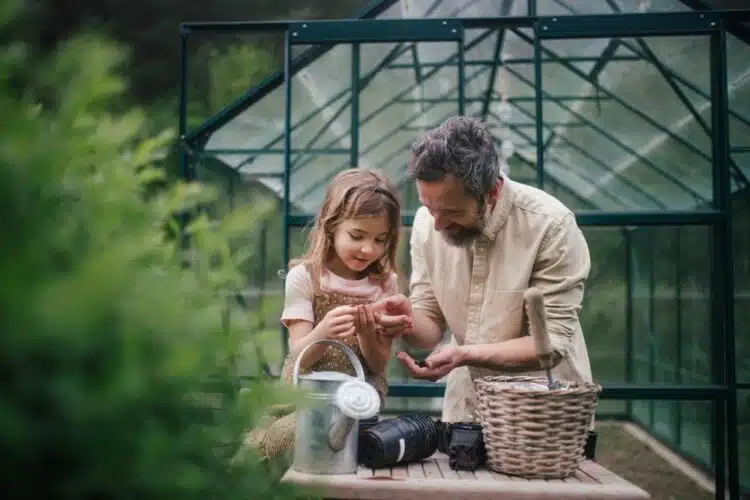
Lock down helped to reinforce the idea that gardening improves your mental and physical health. For one thing, it allows the mind to stop whirring, whether you’re weeding, sowing seeds, cutting back or pruning. You’re in a different time zone and dedicated gardeners (like me) get very stressed and grumpy when they can’t spend time in their personal paradises. It’s the best sort of wind down there is.
You’re connecting with the planet and that makes you realise that you’re not in total control of what happens. That can be very comforting. King Cnut demonstrated this when he attempted to rule the tide in front of his courtiers in the 11th century. He knew he couldn’t do it, by the way. He wanted to show his entourage that secular power was nothing compared to God’s power. Man couldn’t rule the waves, even if they were a King. That recognition makes you more accepting, because life throws curved balls at you. The late Radio D.J, Danny Baker, called it riding the ski slopes of life.
Gardening reinforces the idea that there’s a greater power than mankind and I find that very helpful. You’re in the lap of the Gods so when you plant your runner beans. You hope for benign weather, but you can’t always guarantee it. Hence gardening develops tolerance and patience (even in women like me) and an acceptance that you can’t control everything. My personal bête noire is sowing carrots in the cold Cotswolds! I think I peak too early here. Mid-April is time enough, but I’ve sowed every packet by then.
I enjoy monotonous tasks, whether it’s raking up leaves, dead heading or hand weeding. I always remember reading the late Christopher Lloyd of Great Dixter in the The Well Tempered Garden. He said that “Many gardeners will agree that hand-weeding is not the terrible drudgery that it is often made out to be. Some people find in it a kind of soothing monotony. It leaves their minds free to develop the plot for their next novel or to perfect the brilliant repartee with which they should have encountered a relative’s latest example of unreasonableness.” Enough said there!
It’s physical too and I don’t need to do Pilates, whatever my female friends think! I’m stretching, bending and using plenty of muscle as I remove that over-prickly rose planted in just the wrong place. I’m carrying bags of compost up to the greenhouse. I’m barrowing leaves up to the leaf bin and this year my beech leaves have super-sized after all that rain. These weight-bearing activities are helping to keep me strong and healthy from the bones out.
I am also in tune with the seasons and that gives me a sense of rhythm, self-purpose and a sense of place. I notice the sun moving round. I notice the new bud, or the points of snowdrops pushing through in November. These small things thrill me and, once the shortest day is over, I know that the garden will creep back into life. I’m living for every day, but I’m also looking forward to future changes. I recently heard a talk by John Anderson, the Keeper of the Gardens of the Crown Estate. John spoke about looking at detail and he tells his students to touch the plant and smell the plants and get a feel for them, because all too often their first thought is to photograph it.
You have to experience plants. I cannot emphasise the sensory pleasures of gardening enough. The scent of the winter-flowering daphne, wintersweet and winter honeysuckle drifting through the garden on a precociously warm January afternoon is heavenly. Many winter-flowering plants have a divine scent. If you ask me, every new garden should come with a free sarcococca by the garden gate, for this evergreen is the most scented of all.
John Anderson also advised his students to pick one plant of the day and write it down. By the end of the 3-year course, they’d have over a thousand plants in their notebooks and they’d know when they flowered as well. What great advice, because these young people will grow up to be future head gardeners. One day, one of them might even go on to be the Keeper of the Royal Gardens. The Savill and Valley Gardens are open to the public and the Visitor Centre serves food. www.windsorgreatpark.co.uk
My third of an acre is nothing as compared, but I cannot resist running my fingers through aromatic plants on high summer days. It’s aromatherapy on tap and I have to have a pot full of zingy lemon verbena, Aloysia citrodora, by my favourite seat. Rosemary, lavender, thyme and sage are essentials in my sunny border too and there are scented-leafed pelargoniums by the door. ‘Attar of Roses’ is a delight.

And I’m a tree hugger too, I love to feel the satin-smooth trunks of Himalayan and Chinese birch trees on a winter’s day. They radiate a soft warmth, like a hibernating anima about to wake. Winter also picks up the cracks and crevices of a whole range of tree trunks, especially when the sun’s low. Trees are magical and if you’re lucky enough to go for a woodland walk when the leaves are on, you’ll emerge fresher because the trees are sucking up carbon dioxide and releasing enervating oxygen.
I’m a lover of rain and I can remember cavorting round the garden in 1976, when the worst drought on record came to an end during the August Bank Holiday. It was the day of the Church Fete and none of us were prepared for the stormy deluge. My first child was in her pram, wearing very little, and I’d decorated the pram with red crepe flowers. The dye ran and my baby daughter was very upset to find herself streaked in red. It took some washing off.
That was a bit extreme and I’m hoping she doesn’t remember. Gentle rain smells sweet following a dry spell and there’s a special word for it – petrichor. The dictionary definition is the earthy scent produced when rain falls on dry soil. It’s that sweet smell when summer rain hits dry ground and gardeners will recognise it – although they may not know the technical term. Petrichor has a calming effect because it includes an earthy smelling chemical called geosmin, which is made by bacteria in the soil. Many a gardener will breathe in the sweet smell of summer rain and relax, for one thing it means that you won’t have to do so much watering!
Dr Niek Buurma, from Cardiff University’s School of Chemistry, has recorded another positive aspect of rainfall. He found that “when drops of water hit a hard surface, they break up and ……. the smaller drops of water pick up a charge.” If it’s a negative charge it has additional electrons and those additional electrons can be picked up by molecules in the air, such as oxygen and carbon dioxide. Research is taking place into the effects of negative ions, but they may boost our mood, relieve stress and give us more energy.

Raindrops are magical too and the first plant I took notice of was Alchemilla mollis, or Lady’s mantle. Raindrops sit in the middle of the leaf, like sparkling solitaires, and the edges of the leaf exude water and that’s where this plant gets its Latin name from. The exuded liquid was thought to magical, because it sprang from nowhere, and alchemists were said to collect the droplets so that they could turn base metals into gold. The Victorian, and my grandmother was one, had a story for every plant. I marvel at the bottlebrushes of Pennisetum too, or the garden spider’s web misted with fine droplets.
Having grown up in the Dig for Victory era I’m a dedicated fruit and vegetable grower and I’m also organic. In winter I can rely on my brassicas, leeks and parsnips. I store maincrop potatoes, dried Borlotti beans and winter squashes. Blackberries get frozen and this year we’ve got lots of Blenheim Orange apples. Raising your own food satisfies the hunter gatherer in us all.
I know I’m extremely fortunate to have my garden, but there are lots of community schemes that encourage groups to garden. The Good to Grow website, www.goodtogrow.org has a map and you can join their network for free. Many of the gardens grow food and that helps with the cost of living. You’ll be a happier bunny too, though.
I’m a lifelong organic gardener and, I always say, it’s for all the wrong reasons. I grew up in the early, cash-strapped 1950s, when gardens were not exposed to a barrage of chemicals. There weren’t many products to buy, but most couldn’t afford them anyway because the household budget was strained. My organic mentor was…
As we creep towards the shortest day a certain sort of magic descends. Low light slants through the garden and picks up all the detail of line, texture and silhouette. I noticed this many years ago when I gardened in Hook Norton on Oxfordshire. All the older gardens had the same sturdy giraffe-like cooking apple…

We are one of just a handful of online nurseries to have attained Plant Healthy certification. In a nutshell, it’s a way of proving that we will always do the right thing in preventing the spread of harmful plant pests and diseases. The Plant Healthy Management Standard is a voluntary initiative that sets out requirements…