***GET AN EXTRA 10% OFF SALE PRICES WITH CODE FLASH10 THIS WEEKEND***
***GET AN EXTRA 10% OFF SALE PRICES WITH CODE FLASH10 THIS WEEKEND***




 https://www.hopesgrovenurseries.co.uk/wp-content/uploads/2026/01/thuja-shutterstock_1665630547-750x355.jpg
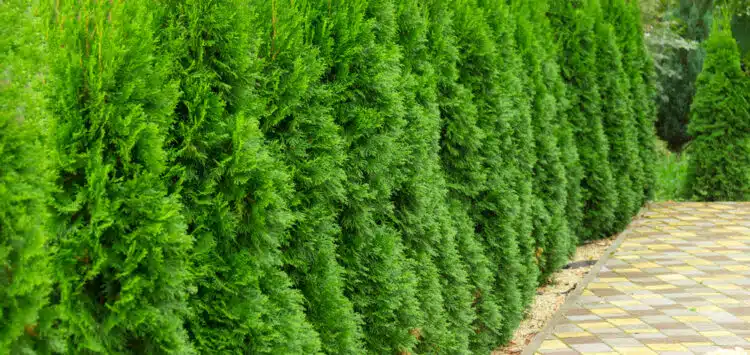
Plants suffer the vagaries of fashion just as much as clothes do and conifers have been out of fashion for many a year, rather like bell bottoms. However, they are due a revival because lots of conifers are extremely hardy and evergreen and these two words don’t go together very often. Most evergreens tend to be less hardy than deciduous plants, in almost every case, but the conifer is the exception because most of them are very hardy and evergreen.
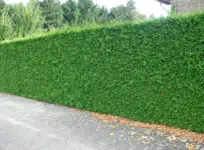
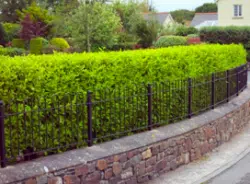
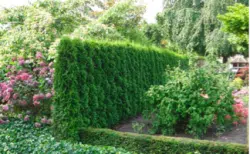
Thuja is one the one of the very best, because it’s got small scale-like leaves that form overlapping scales and make fan-shaped sprays. They make densely textured barriers and they are very amenable to being clipped, so they often make very good hedges. Some form pyramidal trees so they tend to have wider bottoms, so there are no unsightly gaps. Foliage can vary from grey-green to brighter green, from variegated to golden and they’re versatile too. Most will grow in almost every soil, except for chalky, waterlogged or extremely sandy conditions. Thuja can cope with maritime climates and tolerate shade.
There are five species of Thuja found in temperate areas of the Northern hemisphere. Two are American and three come from Asia. They are called arbor-vitae, or the tree of life because of their evergreen presence.
They are all hardy and all have aromatic foliage reminiscent of pineapple, although some say pear drops.
T. occidentalis is an American species from eastern North America and there are lots of different forms in cultivation. It was introduced into Europe in 1534 and it’s known as American arbor-vitae. Size and shape vary, because conifers often mutate and produce unusual side shoots known as sports. Most compact conifers have arrived this way. I hesitate to use the word dwarf, because they’re rarely that small.
‘Smaragd’, which translates as emerald, is a slower-growing thuja that started life as one of these mutations, or sports. It arrived in Denmark when D.T Poulsen spotted an unusual greener shoot on ‘Kelleriis Viridis’, a form Poulsen named in 1928. ‘Smaragd’ keeps its vivid colour in winter, so this neat hedge glows throughout the year.
Thuja plicata ‘Atrovirens’, known as the Western Red Cedar, has lush, slightly drooping darker green foliage and it’s a faster-growing option. ‘Atrovirens’ an older plant, having been grown in Britain since 1897. (The information comes from the Royal Horticultural Society’s Encyclopedia of Conifers: A Comprehensive Guide to Cultivars and Species by Aris G. Auders and Derek P. Spicer, published in 2013.)
‘Atrovirens’ has two great advantages. It can regenerate from brown wood and it will tolerate chalk and moist soil alike. It’s also pollution-tolerant and able to absorb pollution particles so it’s an ideal choice for urban areas.
Both of these columnar thujas make slender hedges and. Because of their pyramidal shape, you can create a hedge quickly. Plants will come in root-balled form, having been lifted between October and early May, and you’ll need two per metre. You will need to water your newly planted hedge for the first two growing seasons. Start your pruning regime when your hedge is young, to thicken it up, and this ‘formative pruning’ can be done several times during the growing season. Don’t trim the height, until it’s a foot below where you want it though.
Pruning Established Thuja Hedges
Slower-growing forms make the best hedges, but they will still need two trims a year ideally, one in early May and one in late August. The spring prune encourages new growth, thereby plumping up the hedge with new foliage. The late-summer and autumn prune occurs after the flow of sap has begun to slow. This one neatens up the hedge and provide a strong silhouette over winter. Doing this ensures that you get a thicker hedge, without gaps, from the bottom upwards.
Once you’ve achieved the ideal hedge for you, you can do a harder prune in spring because it will soon fill up the gaps. Try to prune after rain, if possible, so that the sap flows and seals any wounds. If we’re having a dry year, water your hedge a day or so before pruning it to encourage the sap to flow. Give you hedge some food after pruning. A mixture of seaweed and bonemeal can be watered on to stimulate growth. This mixture’s very good for all topiary, including box.
Pruning Tips and Safety
It’s important to spend time on pruning, because a thuja hedge could grow an average of two feet every year.
Always prune from the bottom upwards, using a good chain saw if you have one. Keep the cutting edge parallel to the hedge. A pole hedge trimmer will allow you at reach taller hedges. You can also use hedge clippers, although that takes far longer. ARS Hedge Shears KR-1000 are excellent. I couldn’t manage without mine.
Straight-topped hedges look ultra-smart, but a rounded top will shrug off the snow better, so if you’re prone to falls in winter curving the top is best. Safety is important. Make sure that you wear goggles, to protect your eyes. Use a tripod ladder, which is more stable than an ordinary ladder. Invest in a work platform if you have a lot of hedges. Henchman do a good range.
If it’s a long hedge, covering an expanse of ground, use a line stretched from between poles placed at either end. Aim for 2m, which will keep the neighbours happy, and stand back every few minutes to check your progress. The clippings can be taken to a waste site, or used to mulch paths – although you may need a shredder to cut them up first.
If you’re reclaiming a neglected thuja hedge, be gentle and prune it lightly. Watering in drier seasons will help to boost growth, especially if your hedge has been planted recently.

I’m a lifelong organic gardener and, I always say, it’s for all the wrong reasons. I grew up in the early, cash-strapped 1950s, when gardens were not exposed to a barrage of chemicals. There weren’t many products to buy, but most couldn’t afford them anyway because the household budget was strained. My organic mentor was…
As we creep towards the shortest day a certain sort of magic descends. Low light slants through the garden and picks up all the detail of line, texture and silhouette. I noticed this many years ago when I gardened in Hook Norton on Oxfordshire. All the older gardens had the same sturdy giraffe-like cooking apple…

We are one of just a handful of online nurseries to have attained Plant Healthy certification. In a nutshell, it’s a way of proving that we will always do the right thing in preventing the spread of harmful plant pests and diseases. The Plant Healthy Management Standard is a voluntary initiative that sets out requirements…