***AN EXTRA 20% OFF SALE PRICES WITH CODE MARCH2026 – ENDS TONIGHT***
***AN EXTRA 20% OFF SALE PRICES WITH CODE MARCH2026 – ENDS TONIGHT***




 https://www.hopesgrovenurseries.co.uk/wp-content/uploads/2022/09/parrotia-autumn-foliage-750x500.jpg
Autumn light will stoke the fire and provide a warm glow in your garden.
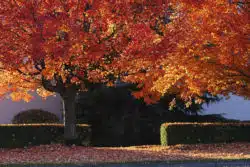
Ask a hundred gardeners to pick their favourite month and I can guarantee that September would be at the top for many. There’s a magical light for one thing, because the sun is beginning to sink a little lower every day. It casts a jewel-box richness that deepens colour. The nights are cooling off too, but early autumn sunshine still warms the days and reminds us of summer past. Refreshing early morning dews become a feature, reviving the garden once again. And the plants respond.
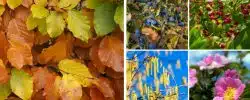
Deciduous woody plants sense the changing season and their fading leaves begin to turn to shades of plum, red, orange and yellow creating an autumnal palette that’s earthy and warm. Deciduous Euonymus is one of the earliest to colour up and the common names, firebush and burning bush, describe the fiery-red colour of the autumnal foliage to a tee. As the colour deepens the leaves slant downwards, displaying their colour and form to advantage. Their other common name is spindle, because the hard wood was fashioned into bobbins, pegs and spindles.
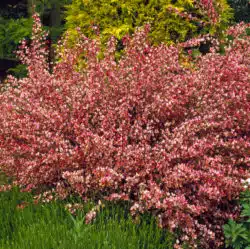
Euonymus alatus, a native of central and northern China, Japan, and North Korea, is known as the winged spindle because mature specimens develop corky wings on the main stems. These are a real winter feature, once the leaves drop. ‘Compactus’, a shorter form, is an ideal plant for a low hedge, rising to three feet on average, or 100cm. It can also be grown as a specimen. The branches of ‘Compactus’ arrange themselves well, overlapping to form a wide, tiered shape, but it’s worth noting that these architectural plants colour up best in a brighter position.

Dogwoods also colour up well, but they generally have foliage that deepens to a sombre Merlot-red. Cornus alba, an extremely hardy and adaptable species from Siberia, China and North Korea, comes in several forms. They all drop their leaves early to reveal colourful stems. ‘Kessleringii’ has damson-black stems. ‘Sibrica’ has crimson-red stems. The North American Cornus sericea ‘Flaviramea’ has pale olive-green stems that glow in low light. Plant them in drifts, making sure that the black stems of ‘Kesselringii’ are backed by a brighter colour, otherwise they get lost against the soil.
These thicker stemmed dogwoods tolerate moist soil so they are often planted on low-lying land, or close to ponds. They tolerate a wide range of conditions and soils. There are twiggier dogwoods that look like tiny flames. Cornus sanguinea ‘Anny’s Winter Orange’, raised in The Netherlands in the mid-1990s, develops orange yellow foliage on stems that have orange-red tips. It’s a stunner, the woody version of a juicy blood orange, and brighter than ‘Midwinter Fire’. These also need to be in a bright position, so that autumnal and winter light reaches them to cast its magic.
Pruning dogwoods varies according to growth habit. Those with thicker pencil-thick stems (that pop up separately) can be stooled or cut back to ground level. You can do this with Cornus alba in spring and this will ensure that they produce a new crop of colourful pencil-thick stems every year. Twiggier dogwoods, with a bushy shape and main trunk, are bred from the European species Cornus sanguinea. They need a gentler pruning regime. Remove roughly one third of the top growth every spring, to encourage new twiggy growth on the tips. They are not vigorous enough to withstand a full chop.
A Touch of the Orient
Japanese maples, named forms of Acer palmatum, are terrific because they offer such variation of form and leaf shape. They are more challenging to grow because their new foliage is prone to frost damage, especially if they are exposed to morning sun following a cold night. The best way to ensure this doesn’t happen is to use them in shadier places under a protective leafy canopy.
Japanese maples like summer rain, because Japan gets a rainy season lasting six weeks that begins in June. However, Japanese winters are drier than ours so they do not thrive in winter wet. If grown under large trees, winter wet is rarely a problem. They prefer neutral to acid soil. If you’re limy, grow them in containers of compost.
These small, slow growing trees can also be grown in large containers with the proviso that they get extra water in summer and good drainage in winter. Standing your container on pot feet will allow surplus water to escape. Move the pots into a sheltered position in winter, so that the roots don’t freeze.
‘Osakazuki’ has palmate green leaves and these are stunning in spring as they unfurl from pleated Geisha-girl fans of foliage. The leaves remain green during summer, but turn bright-red in autumn. Many consider this the best Japanese maple for fiery red colour and ‘Osakazuki’ has been grown in gardens since 1882. That’s quite a recommendation. It is often containerised.
‘Bloodgood’, which came from the Bloodgood Nursery in New York, lives up to its colourful epithet. It has reddish-purple five-lobed foliage in summer and this develops into bright-red once the days shorten. The red fruits are also attractive. It will reach 5 feet (1.5m). ‘Bloodgood’ produced a witches’ broom and this shorter, but similar, red acer was named ‘Skeeter’s Broom’. It will only get to just over 6 feet (2m), so it’s a good one for a smaller garden. It’s less demanding to grow.
Some acers have dissected foliage that looks really lacy, almost skeletal in form, and ‘Garnet’ produces a feathery mound of foliage that cascades downwards. Divided foliage is less likely to scorch. ‘Shishi-gashira’ has deeply cut dark-green foliage that turns to shades of barley-gold as autumn descends. It is one of the slowest growing, so it develops a lovely intricate shape that fountains outwards, eventually reaching five feet in height (1.5m).
Sangu-kaku, also known as ‘Senkaki’, is a stunning small tree with coral-red bark. The five-to-seven lobed green foliage develops an orange flush in autumn, but also keeps some green. It’s another golden oldie from 1882. It’s an essential for the winter garden and it’s often used for Japanese bonsai because it offers so much colour and form. The faster growing ‘Orange Dream’ has colourful foliage from the off, in shades of orange and yellow. As autumn approaches the foliage turns completely yellow.
The paperbark maple, Acer griseum, is one of the loveliest small trees, because the rich-brown bark peels away and reveals the shiny new cinnamon-brown bark underneath. This mixture of textures catches the light once the sun is low in the sky. In autumn the leaves turn a mixture of red and yellow and this slow-growing tree makes an interesting multi-stemmed shape. Better still, many find this easy to grow.
The Katsura tree, Cercidiphyllum japonicum, is a large tree with heart-shaped small leaves that emerge pinkish and then turn to pale-green, before turning orange in the autumn. You often smell this lovely tree before you see it, because it produces a toffee apple and burnt caramel scent and the smell lingers on the air. It was the late Geoff Hamilton’s favourite tree and several grow at Barnsdale Gardens in Rutland.
There are several shrubbier plants that also colour well and if you haven’t grown the compact Fuji cherry, Prunus incisa ‘Kojo-no-mai’, you should. It is smothered in tiny blush-white flowers in early April and they’re held in pink calices, so it’s almost like bridal confetti. In autumn the small leaves turn orange and a lot of ornamental cherries share this characteristic, including ‘Kursar’. These could both cast light shade over spring bulbs.
If you have a prominent position in the garden the tiered branches and layers of Viburnum plicatum light up autumn once the white lacecap flowers have gone over. The more compact ‘Kilimanjaro Sunrise’, named the RHS Chelsea Flower Show Plant of the Year in 2015, is suited to smaller gardens. White summer flowers fade to pink, before red berries are formed and these are flattered by orange and red foliage in September.
If you’ve masses of space Parrotia persica, the Persian ironwood, makes a large wide shrub. Once there’s a nip in the air the leaves will turn a mixture of liquid gold and red. Once the foliage drops, tiny red flowers will appear on the branches from midwinter onwards. And you’ll get mottled, flaking bark once your Persian ironwood reaches maturity.

I’m a lifelong organic gardener and, I always say, it’s for all the wrong reasons. I grew up in the early, cash-strapped 1950s, when gardens were not exposed to a barrage of chemicals. There weren’t many products to buy, but most couldn’t afford them anyway because the household budget was strained. My organic mentor was…
As we creep towards the shortest day a certain sort of magic descends. Low light slants through the garden and picks up all the detail of line, texture and silhouette. I noticed this many years ago when I gardened in Hook Norton on Oxfordshire. All the older gardens had the same sturdy giraffe-like cooking apple…

We are one of just a handful of online nurseries to have attained Plant Healthy certification. In a nutshell, it’s a way of proving that we will always do the right thing in preventing the spread of harmful plant pests and diseases. The Plant Healthy Management Standard is a voluntary initiative that sets out requirements…