10% OFF SALE PRICES WITH CODE EXTRA10 – ENDS MIDNIGHT SUNDAY
10% OFF SALE PRICES WITH CODE EXTRA10 – ENDS MIDNIGHT SUNDAY




 https://www.hopesgrovenurseries.co.uk/wp-content/uploads/2025/07/bare-root-Copy-750x204.jpg
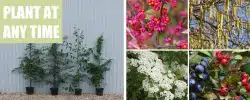
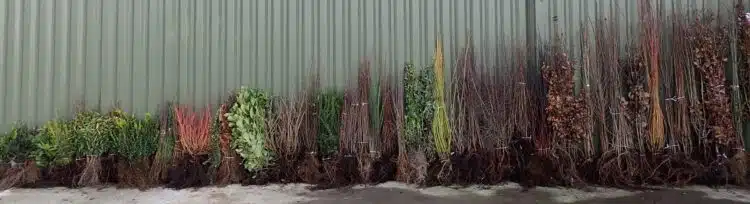
Gardeners don’t always realise the advantages of planting bare-root shrubs and trees during the winter and spring months, they may look like simple sticks when they arrive, but they romp away because woody plants have fine fibrous roots that spread out into the soil once spring arrives. They are primed to put on a growth spurt when spring arrives, rather like teenagers, and they’ll soon overtake larger potted plants because their fibrous roots are able to penetrate straight into the soil.
Hopes Grove Nursery grows over a million plants on 125 acres in the Weald of Kent. Their bare root plants are lifted and posted out and then the magic begins, because (as I’ve already said) they establish themselves quickly. Most woody plants start life in the ground so they hardly notice that they’ve been moved. Roses also do very well when planted as bare-root plants.
The other big advantage is price. Bare-root plants are much cheaper than containerised plants and they’re also much lighter in weight, so they cost less to post out. They will arrive between November and early March, just when the gardening year has slowed down. And it’s immensely satisfying to watch your hedge, or your trees, develop, rather like watching your children grow.
Try to order in your plants in October or November and start to prepare the ground before they arrive if you can. Once the soil’s ready, cover the soil with old carpet, cardboard or bubble wrap and this will hopefully keep the ground frost-free. Once they arrive you can plant your bare-root hedging etc and it’s very easy to see where the division between the roots and top growth is.
If the soil’s already damp, use a spade to create a small trench and pop the plants in at the recommended spacings, usually 3 – 5 per metre. A double row, a couple of feet apart, often forms a hedge faster. Create
V shapes by positioning the second-row plants between the two first row plants and then they’ll get plenty of light and food. In other words, don’t put them one in front of the other.
There is no need to add manure to the hole. In my opinion, this deters root growth. Bonemeal will encourage root growth and a child’s handful under each bare-root whip is ideal. If the ground feels dry, water it well first, a do keep the weeds down after you’ve planted. You will also need spiral tree guards to keep your plants safe until they begin to grow.
Once they arrive, open the package. If the weather’s severe, or you’re too busy, find a sheltered patch close to the house for instance, and cut a slit trench with a garden spade and pop the bundles of whips in together. As soon as the ground thaws again, separate the bundles and start planting. Never plant into frozen ground.
The Wildlife Hedge
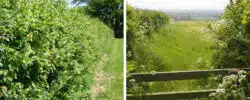
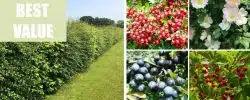
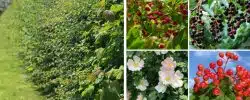
The best sort of hedge anyone could plant these days is a native hedge designed to sustain insects, birds and bees because the UK is a very nature-depleted country. We only have 53% of our natural diversity left and, when The Natural History Museum rated countries for their natural biodiversity, we came 189th out of 218 countries. The UK have lost 40 million birds since 1970 alone and that’s largely due to the drop in insect life.
The common hawthorn, Crataegus monogyna, is king when it comes to attracting wildlife. In theory it could attract 149 species of insect. The cake-scented flowers, which mark the transition between spring and summer, give rise to the phrase never cast a clout until May’s out. The scented flowers are highly attractive to all pollinators and they are an important food for dormice and other small rodents as well. Many moth caterpillars feed on the leaves and The Woodland Trust tell us that hawthorn, orchard ermine, pear leaf blister, rhomboid tortrix, light emerald, lackey, vapourer, fruitlet-mining tortrix, small eggar and lappet moths feed on this native plant.
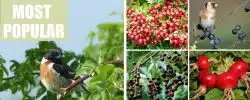
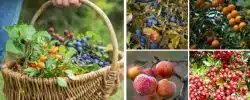
The haws are rich in antioxidants and are eaten by migrating birds, such as redwings, fieldfares and thrushes, as well as small mammals. The dense, thorny foliage makes fantastic nesting shelter for many species of bird. Some gardeners leave their hawthorn uncut, so that they form small rather gnarled trees that appear along the hedge hedges. By doing that, you’ll get flowers and fruit year after year and you’ll be able to watch the birds at work in the winter.
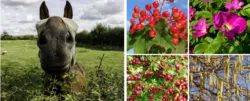
Next in nature-friendliness comes the common hazel, Corylus avellana. It is wind pollinated, but queen bumblebees visit catkins in order to collect the pollen so that they can raise their brood. Pussy willows also provide a good source of early pollen. Hazels produce their lamb’s tail catkins early in the year and I love to pick a few to go with daffodils. These yellow catkins are the male flowers and they are followed by small red female flowers that you’ll struggle to see unless you look very hard.
Hazel nuts are formed and they are taken by squirrels in my garden. And that’s a dubious pleasure, because they then feast on my tulips. Don’t let that put you off though, for hazel could sustain 79 different insects. The foliage is the caterpillar food plant of several moth species including the large emerald, small white wave, barred umber and nut-tree tussock. Moths need our help too.
Hazel makes a fine hedging plant, but they also make good plants in a woodland garden. If you allow them to develop, hazels cast dappled shade and their leaf litter forms a dry layer that’s appreciated by lots of overwintering insects. Snowdrops really love pushing up through hazel leaf litter, as do wood anemones. The straight branches can be cut for bean poles and the twiggier growth makes good pea sticks. It’s also a fabulous hedging plant.
The guelder rose, Viburnum opulus, is known as the wayfaring tree because it often grows close to paths. The white flowers appear in early summer, often following on from hawthorn. There are large sterile florets round the edge and these surround smaller fertile flowers and these are the ones that sustain pollinators and small insects. Clusters of translucent bright-red berries form by September and are quickly devoured by blackbirds, finches and thrushes. This is one berry that normally goes quickly, I find, along with holly.
The sloe is also a popular fruit for birds and those who like to make sloe gin for Christmas have to be quick off the mark. The blackthorn is spiny, admittedly, as the name Prunus spinosa suggests so it needs placing carefully. The single white flowers form wands of flower and they often signal cold weather in April. The blackthorn winter is a well-known country expression, but once the flowers brown warmer weather arrives.
The most nutritious fruit for birds belongs to the spindle tree, Euonymus europaeus. They are colourful bright-pink and orange fruits, so they stand out well in autumn, and they are particularly prized by robins. It’s said that male robins will fight each other to the death to protect THEIR spindle tree. This tree attracts aphids, which is good news, because these help to sustain fledgeling birds, ladybirds, hoverfly and lacewing larva. The greenish flowers are very attractive to flies and flies are excellent pollinators and recyclers. The leaves are eaten by caterpillars of moths, including the magpie, spindle ermine and scorched, as well as the holly blue butterfly.
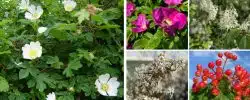
I’d also add dogwood, Cornus sanguinea, and this tolerates damper conditions. The foliage turns colour very early and it’s an unusual crimson-purple colour and that intensifies as the leaves droop downwards. The black berries, which follow the clusters of starry white flowers, are appreciated by all sorts of birds. Finally, the crab apple (Malus sylvestris) has pink and white blossom that’s adored by bees and other insects. This lasts a long time and it will cross pollinate domestic apple varieties, so it’s well worth planting. Caterpillars of many moths, including the eyed hawk-moth, green pug, Chinese character and pale tussock, rely on the foliage and small green fruits follow and they provide food during the winter months. You can also make crab apple jelly.
Cutting this type of hedge needs careful consideration because winter pruning will probably reduce flower and fruit. On balance late winter, either February or March, is the best time, but I’d recommend thinking about cutting your hedge back every second year but that will depend on you.
Creating Privacy
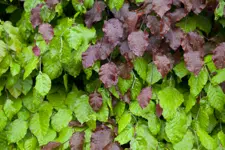
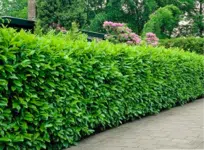
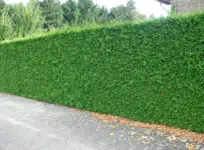
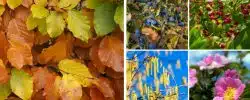
The plants mentioned in the wildlife hedge are all deciduous, but many gardeners want more of a definite screen that looks tidier. Beech trees, Fagus sylvatica, keep some of their leaves in winter when grown as a hedge – as long as the hedge is cut in August. These leaves look an attractive chestnut brown in winter and this twiggy hedge is dense. Together they form a good barrier. When beech foliage breaks out of the buds the soft leaves are a vivid green for a short time and they set off wild cobalt-blue native bluebells and this spectacle is very present in The Chiltern Hills in Buckinghamshire. There is a purple-leafed form which, arguably, looks better in urban settings. The green is definitely more pastoral.
Beech foliage is eaten by the caterpillars of moths, including the barred hook-tip, clay triple-lines and olive crescent. The seeds, or beech nuts, are eaten by mice, voles, squirrels and birds. They, like many tree seeds, are poisonous to cattle, ponies and horses. In the New Forest in Hampshire, they release pigs from the third week in Septembe, for a minimum of 60 days. They ( hopefully) consume all the fallen acorns, beechmast, chestnuts and other nuts to prevent the free roaming ponies and cattle from being poisoned. This tradition is called pannage.
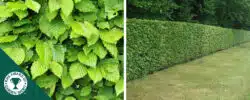
Hornbeam (Carpinus betulus) is similar to beech but with thicker leaves are heavily serrated around the edges. Catkins are formed and these produce papery, green winged fruits known as samaras. Birds devour the seeds. Hornbeam grown as a hedge or as a pleached tree is unlike to fruit however. It also needs better drainage than beech, so please ring the Hopes Grove experts for their opinion – before you get planting!

Looking to spruce up your garden this year and need some new ideas? Discover our predictions for the top 2026 gardening trends in the UK below – set to focus on sustainability, smarter use of space, and creating gardens that support both people and wildlife. Top 5 Biggest Gardening Trends For 2026 1. Native planting:…
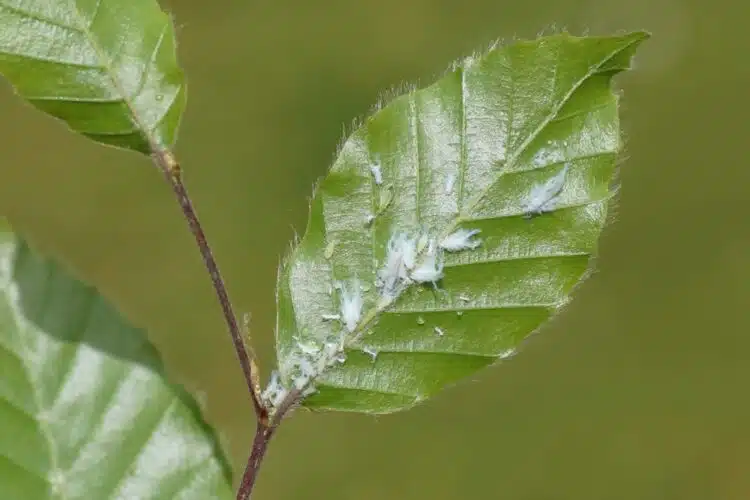
I’m a lifelong organic gardener and, I always say, it’s for all the wrong reasons. I grew up in the early, cash-strapped 1950s, when gardens were not exposed to a barrage of chemicals. There weren’t many products to buy, but most couldn’t afford them anyway because the household budget was strained. My organic mentor was…
As we creep towards the shortest day a certain sort of magic descends. Low light slants through the garden and picks up all the detail of line, texture and silhouette. I noticed this many years ago when I gardened in Hook Norton on Oxfordshire. All the older gardens had the same sturdy giraffe-like cooking apple…