20% OFF SALE PRICES WITH CODE EXTRA20 – ENDS TONIGHT
20% OFF SALE PRICES WITH CODE EXTRA20 – ENDS TONIGHT




 https://www.hopesgrovenurseries.co.uk/wp-content/uploads/2026/01/prunus-autumnalis.jpg-750x502.jpg
I am ashamed to say, that I didn’t appreciate how important trees are in gardens until I moved to a completely bare garden in November 2005. I set about planting my hellebores and snowdrops taken from my old garden, with the agreement of my vendors. I placed them in a spot at the lower end of the garden, although it proved a little too damp for my snowdrops in the years to come.
My transplanted treasures flourished and, in the following spring, I stood back to admire them. And they looked AWFUL, just like a multi-coloured carpet of bedding plants. Although a sheet of ground-hugging colour is fine in a municipal park, one-dimensional planting looks ghastly in a garden. That’s when the penny finally dropped! I realised there and then, for the first time I have to say, that trees are vital because they add scale and perspective to the rest of your planting. Better still, the overhead canopy casts magic lantern patterns of light and shade on the ground as the sun moves through the sky from dawn to dusk. Trees are benign guardians too. They offer protection, underground and overground, and that’s especially important now that climate change is delivering heavier bursts of rain and, on occasions, droughts. We no longer have the weather I enjoyed in my youth, summed up so succinctly as three fine days and a thunderstorm. This is attributed to a comment made by Kind George 11 in the early part of the 18th century.
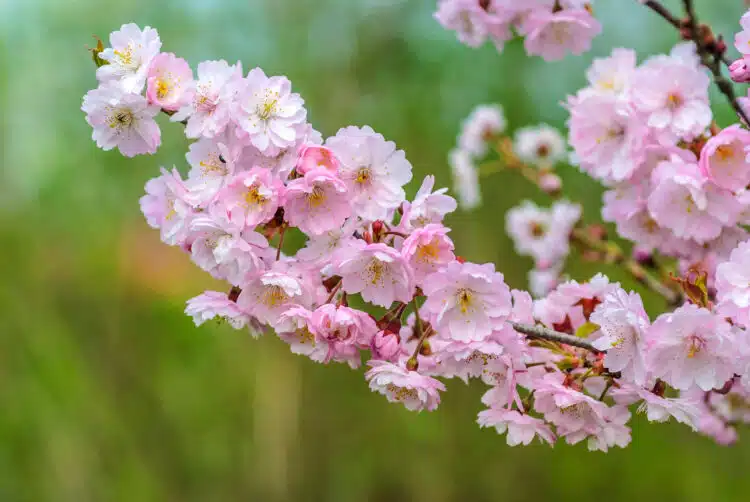
I wish I could boast that my tree planting went well to start with but, like many gardeners denied an decent acreage, I have planted very few trees in my lifetime despite six decades of gardening. I took the nostalgic route and opted for an autumn-flowering cherry, Prunus x subhirtella ‘Autumnalis’, that had graced my London school playground under the flightpath to Heathrow. Oh, how I loved those trees, with their flourish of pale-pink blossom floating through the air on a grey, still November day. I would scurry after the petals, brown knee socks round my ankles chasing dreams.
The autumn-flowering cherry, confusingly called the winter-flowering cherry as well, is a lovely tree for warmer parts of the UK when planted in well-drained soil and sun. I thoroughly recommend it for those with warmer sheltered gardens. However, I live in the rural upland wastes of North Gloucestershire, an area known locally as the empty quarter. It’s inhospitable up here. When I planted my autumn-flowering cherry in 2006 it was a small parasol. Nineteen years later, it’s still a small parasol because it’s far too cold in the upper reaches of the North Cotswolds. There are plenty of them thriving fifteen miles away in Cirencester and Cheltenham – so don’t be put off by my tale of woe.
I felt slightly better when I found out that the great plantsman, Graham Stuart Thomas, had planted several in the late Lady Kleinwort’s private garden near Stow-on-the-Wold. The local rhyme Stow-on-the-Wold where the wind blows cold and the women can’t roast their dinners, speaks volumes. We’re actually colder that Stow here and Thomas’s trees are mostly gone to the arboretum in the sky, although there were one or two sick looking survivors the last time I visited.
The problem is, most of us have smaller gardens and we need compact trees that grow slowly. When a tree is slow-growing it forms an interesting shape, rather than going straight up to heaven. Many have made unwise choices and my own village is full of large, handsome trees that are regularly chain-sawed to restrict their size. In winter they look like monsters with missing limbs. Not a good look, so do select smaller trees that grow slowly and do make sure that they offer you something for at least two or three of the seasons – be it flower, bark, silhouette, or autumn colour.
I love spring blossom so I have turned to other cherries and they have done well for me, including ‘Kursar’. Smaller gardens are suited to weeping trees and Cheal’s Weeping Cherry, more correctly ‘Kiku-Shidare-Zakura’, will produce a cascade of double rose-pink flowers. The branches develop horizontally before plummeting downwards, so this has an interesting shape. The late-April or early May blossom is framed by the fresh bronze-green foliage.
‘Kanzan’, a medium-sized tree, is usually in flower by late April and the double flowers are a slightly purplish pink. This upright, spreading tree has coppery foliage in spring and then the leaves turn green before colouring up to orange in autumn. ‘Royal Burgundy’, which was a sport found on ‘Kanzan’ in the USA, bears double pink blossom along the length of the stems, just as the dark-purple foliage emerges, so this is a stunner in April. In autumn the foliage colours up to fiery orange.
If space is limited the shrub-like Prunus incisa ‘Kojo-no-mai’ will produce masses of tiny single pale-pink flowers held in red calices all along the divaricate, or meandering, branches. The flowers are as delicate as real confetti made from tiny petals. Coppery autumn foliage follows on and ‘Kojo-no-mai’ will take twenty years to reach 2m or 6ft, so this is an ideal candidate for a woodland border. I first saw this shrubby beauty in the woodland garden at The National Trust’s Knighthayes Court in Devon and the originals were then forty years old. Blue muscari underpinned the pale blossom. This compact cherry would be happy on a patio, sitting on pot feet.
Most named Japanese cherries were found as seedlings on the mountainous slopes of Japan, before being moved to gardens. The original ‘Kojo-no-Mai’ for instance, sadly gone now, was found along the Yoshida Path to Mount Fuji – hence the name Fuji cherry. Not all Fuji cherries are diminutive and slow growing. One I bought, labelled ‘Kojo-no-mai’ is now at least ten feet tall and growing upward. The bumblebees love the flowers, so it stays incongruous though it is.
Flowering cherries are extremely hardy, but they do need good drainage and a sunny position due their mountain homes in Japan. I have also found ‘Okame’ useful because this is also more shrub than tree. In time it will become a small tree no doubt.
Many modern-bred spring-flowering magnolias can also be grown in smaller gardens because they are compact and flower when young. Magnolia stellata, has wide gaps between each petal, earning it the common name of star magnolia. The gap in the flowers seems to limit frost damage, because cold air escapes through the gap. The woody trunk and branches form interesting shapes and the bud cases are works of art, pale-green fluffy cases that split to reveal those sumptuous satin-textured petals. These ancient plants, which evolved before bees, are beetle-pollinated so the edible middle of magnolia flowers is fleshy and pink. Pollination takes place as they munch.
‘Heaven Scent’ is well named for its highly fragrant pale-pink tulip-shaped flowers which are heavily flushed in rose-purple. It’s the best of the Californian-bred Gresham hybrids, raised in the mid-1950s, and it will reach roughly 4m or 12ft after ten years. The tulip-shaped flowers appear in April and there are always plenty of them. Another group of deliberately-bred American hybrid magnolias was raised in the National Arboretum in Washington D.C in the 1960s, by de Vos and Kosar.
They are affectionately known as Eight Little Girls, because they all bear the names of secretaries who once worked at the arboretum. They include Betty, Susan and Judy. ‘Susan’ is a compact plant (in the UK) with pale-pink tepals with darker reddish backs, so it’s the darkest of the Eight Little Girls. The sweetly scented flowers open wide from sickle-shaped buds. Betty has slightly more garish flowers, with reddish backs to the white tepals. Again, it forms a shrubby plant in the cooler UK climate.
Try to position your magnolias in frost-free positions, at the top of a slope for instance. This allows cold air to flow downwards. They should not be exposed to early morning sunshine, because the quick thaw browns spring flowers of all kinds. ‘Rosea’ has pale-pink flowers that are softer on the eye and you can tuck these Littler Sisters away in woodland gardens due to their size. Magnolias are shallow rooted though, so surround them with plants that don’t need work.
Magnolias are wonderful additions to the spring garden, adding a touch of the Orient, but the thoroughly English ornamental hawthorns also look good in gardens. Crataegus x media ‘Paul’s Scarlet’ has tight clusters of deep-pink blossom that opens just as spring turns to summer. It forms a rounded tree and, in the autumn, tiny red haws nestle among the leaves.
The Paperbark maple, Acer griseum, is another superb choice for an open site, or light shade. In winter the peeling chestnut-brown bark flakes away to reveal the shiny trunk beneath. Low autumn and winter sun highlights the peeling translucent edges. By spring coppery three-lobed leaves are surrounding lime-green flowers, full of spring zing. By summer there are green winged fruits and then the cooler days of autumn encourages lipstick-red foliage. The winter skeleton is equally beguiling, for this is a tree for every season and it could grace any garden – including yours.

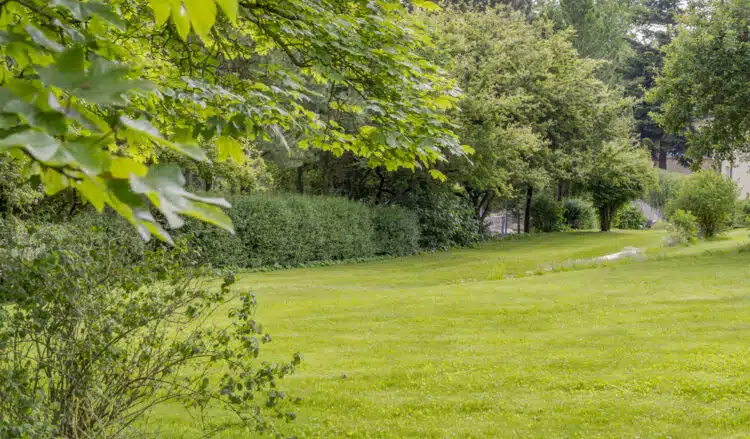
Looking to spruce up your garden this year and need some new ideas? Discover our predictions for the top 2026 gardening trends in the UK below – set to focus on sustainability, smarter use of space, and creating gardens that support both people and wildlife. Top 5 Biggest Gardening Trends For 2026 1. Native planting:…
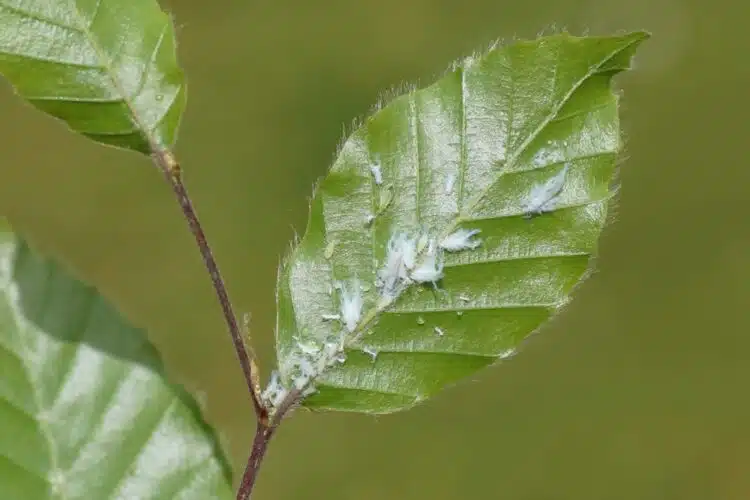
I’m a lifelong organic gardener and, I always say, it’s for all the wrong reasons. I grew up in the early, cash-strapped 1950s, when gardens were not exposed to a barrage of chemicals. There weren’t many products to buy, but most couldn’t afford them anyway because the household budget was strained. My organic mentor was…
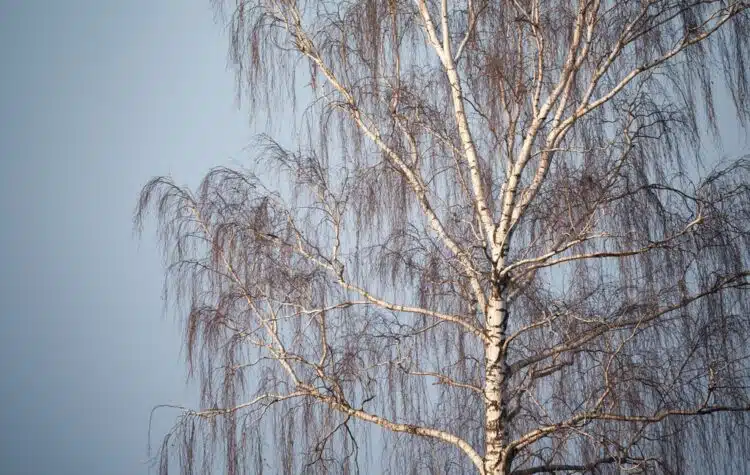
As we creep towards the shortest day a certain sort of magic descends. Low light slants through the garden and picks up all the detail of line, texture and silhouette. I noticed this many years ago when I gardened in Hook Norton on Oxfordshire. All the older gardens had the same sturdy giraffe-like cooking apple…