20% OFF SALE PRICES WITH CODE 20OFF – ENDS TONIGHT!
20% OFF SALE PRICES WITH CODE 20OFF – ENDS TONIGHT!




 https://www.hopesgrovenurseries.co.uk/wp-content/uploads/2025/12/nitida-elegant-al-750x500.jpg
British gardeners have been relying on box (Buxus sempervirens) for centuries because this small-leafed evergreen shrub provides structure in the garden, be it intricate parterre, low hedge or sophisticated topiary. Climate change and the global importation of infected box plants has thrown a spanner in the box tree mechanics. The East Asian box tree moth has been munching its way through box plants since 2007, starting in London and moving up country. Box blight, which was first officially noticed in 2007 as well, is also moving steadily northwards.
The box tree moth is a pretty charcoal-grey and silver creature and the females lay their eggs on box foliage between April and October. The eggs are difficult to spot because they are packed together and they’re the same colour as the underside of your box leaf. They darken as the eggs begin to fill. The voracious caterpillars, looking similar to large cabbage white caterpillars, will soon strip off your box foliage and they’re likely to do it a couple of times a season. Your box recovers, but looks unsightly after an attack.
Jackdaws cleared up two large outbreaks at The National Trust’s Ham House, an organically run garden, consuming both hatches of caterpillars. Although there are insecticides and nematodes available, they will also kill lots of other soft-bodied creatures as well as your box tree caterpillars. The water-on nematodes need moist warm conditions to thrive and they should be applied between March and late-July. Pheremone traps are also on sale.
Box tree caterpillars seem to be able to overwinter here, despite their Asian provenance, especially in warmer urban areas. Their silk-covered larvae make a box-leaf sandwich, between two leaves, that’s difficult to see. Look for leaves that are stuck together, with a silken cocoon inside, and destroy them. Big boots are useful here.
Box blight is also very obvious, because you’ll be left with dead twiggy stems that refuse to grow back. It affects the foliage, not the roots, and I think this fungal disease has been here since the early 2000s. It began with tunnel-grown box plants imported from Italy. Fungal spores are encouraged by humid, damp, warm conditions and the spores travel on the wind before homing in on your healthy box plants. Windy, exposed gardens suffer less. If you catch it early and cut out the infected material and destroy it or bin it, you can contain it. Feeding your box with seaweed will toughen up the foliage and make it more-leathery and resistant to fungal blight.
The problem is our warming world is producing humid, warm conditions most years and that’s just perfect for spore production. Those caterpillars will also be doing their bit to spread the infection, carrying the spores from leaf to leaf as they munch. Many a famous gardener has had to make a difficult choice and that includes our King, Sir Roy Strong and Monty Don. They all battled with their box, before throwing in their luxurious Egyptian cotton towels and digging it up. Their gardens are all in the damper, western half of Britain.
You could try planting variegated box, ‘Elegantissima’, because it’s more resistant to blight and the tasteful cream and green leaves are handsome in a sun-bleached way. I rather feel that the caterpillars will enjoy it just as much though!
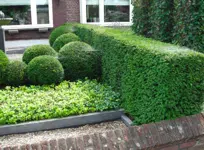
Gardeners are being forced to seek alternatives, after they’ve ditched their box. Nothing quite replaces box in appearance but the nearest lookalike is Phillyrea angustifolia, the narrow-leaved mock privet. This compact evergreen shrub is a Mediterranean member of the olive family with a naturally rounded shape. It can be kept smaller by regular clipping and it can be formed into rounded shapes like domes, roundels and cloud-cut standards. Clip it with shears, but make sure they’re sharp. This toughie, which used to be a Victorian favourite , will grow in sun or shade and it must have come through tough 19th century winters. The small flowers are very bee-friendly.
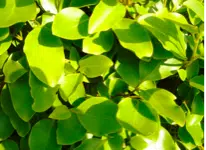
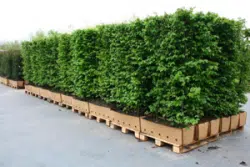
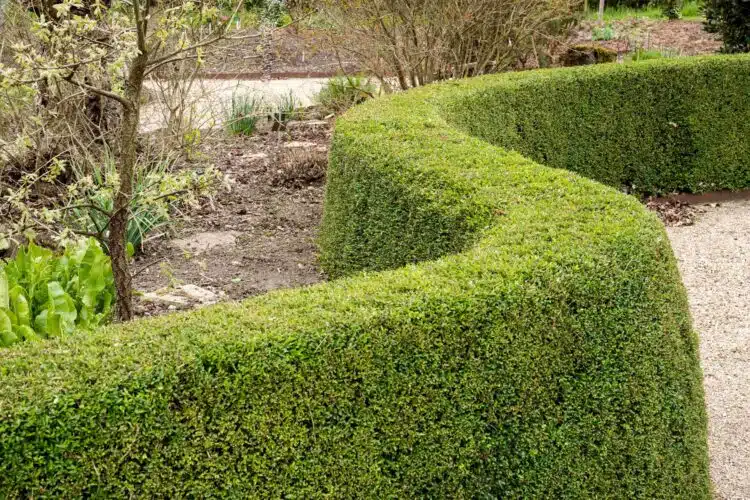
Lonicera nitida ‘Elegant’ is another suitable replacement evergreen, but the leaves are far smaller. It can be clipped into roundels, or grown as a low hedge, reaching up to two feet, and it’s quick to establish. Be creative with this one and form a series of irregular hillocks, think Malvern Hills here, or make a gently curving serpentine hedge worthy of the Rococo age. It sends single radiating shoots out very quickly, so it will need a monthly short back and sides with secateurs, This will get rid of those long growths. Don’t let it get taller than 2 -3ft, or it will do a ‘collapser’ on a wet, windy night and emerge like a sea monster. This one’s best for lower hedges.
The evergreen euonymus, Euonymus japonicus, is also useful for hedging. The rich-green foliage of ‘Green Spire’ is rather hebe-like, with upward-facing shoots, and this could reach a metre, or 39inches, in height. The ordinary species, E. japonicus, has larger oval green leaves and this can form a hedge up to six feet (1.8m) in height. You can also restrict it to two feet (60cm) though. ‘Bravo’ has sage-green leaves edged in cream. ‘Marieke’, also known as ‘Ovatus Aureus’, has golden edged foliage that looks best in shade or dappled shade. All forms of E. japonicus are very tolerant of soil and position and it makes an ideal barrier in coastal areas. It’s bushy, so it will screen your garden and provide privacy.
 Euonymus fortunei is a more-compact evergreen, for lower hedges, and it offers a range of variegated foliage. You’ll need reasonable drainage, because it will resent winter soil that gets waterlogged. It’s best cut in spring, once winter is in retreat, and this will prompt bushy new growth. It’s also a good idea to mulch your plants after trimming, with some compost perhaps, to encourage new growth. Asian plants are used to a six-week rainy season in summer so they resent drying out in summer.
Choosing the right variegation is important, because vivid green and yellow foliage, as found on ‘Emerald n’ Gold’, is almost like liquid sunlight and it conjures up instant warmth. The foliage will light up dappled shade, but may look a little brash in full sunlight. The yellow and green foliage will flatter blues and yellows. ‘Emerald Gaiety’ is far more muted, with mid-green foliage neatly margined in ivory-white. This mixes best with cool mauves, violets, silvers and purples.
‘Emerald Gaiety’ and ‘Emerald n’ Gold’ are both superb for edging a path, or making a low barrier, or as specimen plants because they offer good evergreen foliage and a bushy habit. These softly tactile plants are also small enough to add to containers for winter interest.
The rich evergreen foliage and winter scent of sarcococca could also be used in the same way, for hedge, barrier, specimen or pot. I love the ivory-white flowers and rich-green foliage of S. confusa, because the leaves stay a rich-green. There are others though and ‘Purple Stem’ packs a more powerful fragrance. The purple stems have pinker flowers because it’s a selection of Sarcococca hookeriana var. digyna. The early-flowering ‘Winter Gem’ has ‘Purple Stem’ as one parent and the other is the S. humilis, and it will flower from December until March.
If your garden is south-facing and warm and sunny, silver-leafed plants with a Mediterranean provenance are the way to go. Most Mediterranean plants need to be lightly shaped in September because they need their top growth in order to come through British winters. They can be neatened up in late spring should winter makes them a little ragged.
Cotton lavenders have fine feathery foliage and a mound-forming habit so it’s possible to clip them into roundels or to make hillock-inspired topiary. They are not as effective when clipped into straight lines. Their vivid-yellow flowers tend to be removed with clipping, although you could leave them for the bees, but you’re really growing this for its foliage and form. Santolina chamaecyparissus has silvery foliage that looks a ghostly white in winter light. S. virens has greener foliage and you could mix the two together to create a chess board effect. Both need to bask in full sun.
Never underestimate our native yew, Taxus baccata, because it can be clipped into low hedges because it’s slow-growing. Don’t let that put you off, because you can still achieve a good effect in a few years, or you can buy ready-made topiary – although it does go quickly!
Yew trees will survive on one clip a year, between August and October, and it can be shaped into roundels, balls, spirals, pyramids, or hedges. It’s also good at surrounding trees with a lower layer, rather like a pelmet. It’s the only evergreen that can be cut into bare wood and reliable reshoot afterwards. So far, this long-lived evergreen has escaped the sort of problems box is known for, and it provides the same green presence throughout the year. Yew could be the one for you!


Looking to spruce up your garden this year and need some new ideas? Discover our predictions for the top 2026 gardening trends in the UK below – set to focus on sustainability, smarter use of space, and creating gardens that support both people and wildlife. Top 5 Biggest Gardening Trends For 2026 1. Native planting:…
I’m a lifelong organic gardener and, I always say, it’s for all the wrong reasons. I grew up in the early, cash-strapped 1950s, when gardens were not exposed to a barrage of chemicals. There weren’t many products to buy, but most couldn’t afford them anyway because the household budget was strained. My organic mentor was…

As we creep towards the shortest day a certain sort of magic descends. Low light slants through the garden and picks up all the detail of line, texture and silhouette. I noticed this many years ago when I gardened in Hook Norton on Oxfordshire. All the older gardens had the same sturdy giraffe-like cooking apple…