***GET AN EXTRA 10% OFF SALE PRICES WITH CODE FLASH10, ENDS FRIDAY***
***GET AN EXTRA 10% OFF SALE PRICES WITH CODE FLASH10, ENDS FRIDAY***




 https://www.hopesgrovenurseries.co.uk/wp-content/uploads/2018/07/ten-var-alamy-750x500.jpg
Great gardeners are often good flower arrangers as well and Christopher Lloyd and Beth Chatto loved to cut from their own gardens. Christopher Lloyd lived at Great Dixter in East Sussex, until his death in January 2006. His garden still flourishes under Fergus Garrett, his protégé, and it’s one place everyone should go. I just wish I lived nearer!
Christo, as he was called by friends, loved vivid colours and his garden was exuberant and still is. He’s one of my horticultural heroes, because he carried on growing dahlias in the 1960s and 1970s – when most dismissed them as garish and common. He was the baton holder and I’ve just planted a hundred or more on my own allotment and that says it all. You couldn’t get a more colourful plant.
Christopher owned a vast collection of shirts in different colours. Fergus Garrett once showed a picture of them, all stacked up, and it was like a leaning tower of Pizza consisting of colourful linen layers. A jelly baby affair if ever there was one. Pam Schwerdt and Sibylle Kreutzberger, once Joint Head Gardeners at the nearby National Trust’s Sissinghurst Castle in Kent, visited him often. Their gardening styles were very different. Sibylle and Pam favoured a far more subdued colour palette at Sissinghurst. It was classic English garden.
Sibylle once told me that whenever she wanted to take a photograph of Christopher, he would deliberately create a colour clash knowing how much it would annoy her. If he was wearing a pink shirt on that day, for instance, he would scurry off and find an orange floral back drop to pose in front of. If he was wearing yellow, on the other hand, he’d head for the pinkest flowers he could find. And so on.
However, as Christopher got older, he came to the conclusion that foliage was more important than flower. He wrote a book in 1973, Foliage Plants, which is still an entertaining read today. All his books are: they contain a lot of wit and humour. Beth Chatto and Christopher, were friends for many years and they exchanged letters regularly and these were published in Dear Friend and Gardener, published in 1998.
Beth taught flower arranging and lectured about it, long before she started her nursery and garden at Elmstead Market near Colchester in Essex. She used material from her own garden when teaching. She developed an eye for combining plants – something all flower arrangers do instinctively. They make better gardeners, because they examine the detail.
Beth’s Chelsea Flower Show exhibits astounded the visitors from 1977 until 1987, winning her ten Gold Medals. Her key phrase was cadence and rhythm and she advised many a Chelsea new boy, or girl, on the art of displaying perennials and grasses etc. Garden designer Dan Pearson and the late Alan Street of Avon Bulbs were both influenced by her artistry and forward-thinking approach to right place, right plant.
Many gardeners are flower arrangers and those who do church flowers and arrangements at home have to grow their own foliage, or find it in the hedgerows, because foliage is rarely available in florists’ shops. It’s the back bone of most displays and it’s possible to use fewer flowers and restock them, because the foliage or woody plants endures. A few flowers will go a long way when you’ve got plenty of interesting foliage.
I am not much of a flower arranger. I go out to my cutting garden, scissors in hand, and then I can’t quite bring myself to cut a thing. Kate Ladd of Greenery Flowers, a member of Flowers from the Farm, makes her living from cut flowers. She gives this advice. ‘Cut early in the day, before moisture has been lost through the leaves, because transpiration weakens the cells – making your plant material soften and become less able to cope with having its life force cut off. Remove any leaves below the water line as this causes bacterial build up and, if possible, leave your stems to drink in deep water in a cool dark place for at least a few hours before handling. Cut stems with a sharp tool and create a slanted edge. Do so each time you refresh the vase water.’
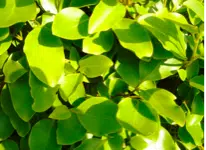
The trick, when cutting material, is to raid your border or hedge without denuding it. My flower arranging friends manage this really well by cutting the back or lower branches away. Their gardens tend to heavier on foliage than flowers. One of the most useful evergreens is euonymus, because this diminutive evergreen comes in such a variety of foliage shades. The plain high-gloss green, Euonymus japonicus ‘Green Spire’ has small box-like leaves with paler new growth above the richer green mature foliage. Rich-green is fabulous with white flowers, although it will go with everything.
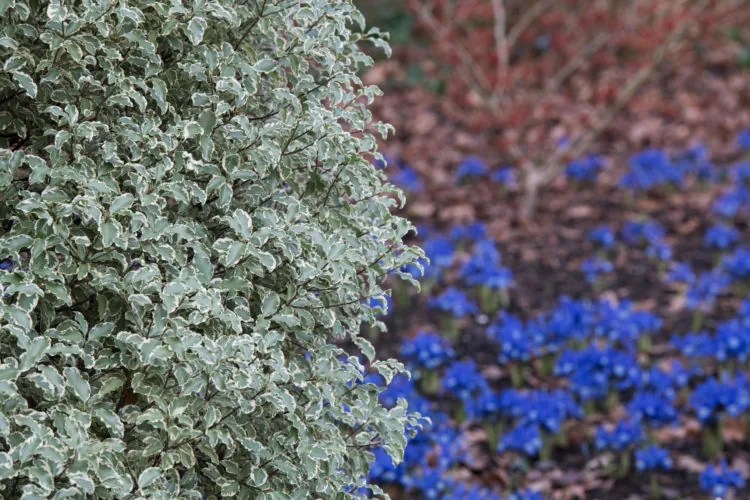
‘Bravo’ has larger sage-green leaves and these are margined and splashed with a colour I liken to full-fat mayonnaise. It’s a brighter warmer mix and would flatter blue and yellow flowers very tastefully, but perhaps not pink – unless you have a ‘Christo’ tendency. ‘Marieke’ has yellow-edged deeper green foliage. These evergreen euonymus varieties tolerate a wide range of soils as long as it’s not wet in winter. They make good low hedging plants, or specimen plants, and they can be sheared back every spring. If you’re planning to cut for the vase, leave these slow-growing evergreens to their own devices.
Variegated plants need using wisely, sprinkled through lots of greens. Many variegated plants have golden markings and they can be used to illuminate dark corners. Aucuba japonica ‘Variegata’, often called Japanese laurel, is heavily speckled in gold. It’s a female variety, but if you grow a male variety, such as ‘Golden King’, you will get large round orange-red berries.
The great thing about aucuba is, it’s hardy and it tolerates pollution. It will grow in shade, reaching an average of five feet (1.5m) after many years. It can be cut back hard, when straggly, and it will always rejuvenate. This Victorian favourite was revived at English Heritage’s Brodsworth Hall in South Yorkshire and some bushes were over a hundred years old.
Other good foliage plants include a British native laurel spurge, Daphne laureola. This has lime-green flowers in early spring, set above rosettes of high-gloss green foliage. It will flower and grow in deep shade, even under mature trees, although the berries often produce seedlings. I like it with Helleborus foetidus, another British native, also found in dank dark places. These share the same dark foliage and lime-light flowers.
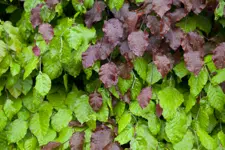
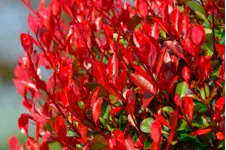
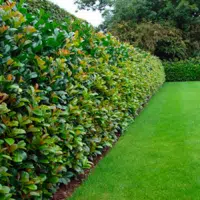
Photinia is another evergreen and this has young red growth when it’s grown in bright positions. It must be cut back to encourage young growth and late spring and early summer are the best times. There are bright-red varieties such as the ubiquitous ‘Red Robin’, but the variegated ‘Louise’ has cream, sage-green and red leaves. Privet and Laurel also cut well and they are very valuable in winter arrangements. You can also use conifer, bay, pittosporum and garrya for their evergreen foliage.
When it comes to trees, the gun-metal grey foliage of eucalyptus, is indispensable. It can be cut for most of the year, although it needs a recovery period between May and August. Hazel catkins can be cut in early spring and oak looks tremendous in a vase, just as the new leaves emerge. Beech and birch also cut well. The latter offers a delicate touch with black twiggy branches supporting almost diamond-shaped small leaves.
I also like Cotinus foliage and ‘Royal Purple’ can be cut in summer, when the round leaves are a vivid purple-red. By autumn they’ve begun to develop bright-pink flecks. These easily grown shrubs slot into herbaceous borders well and the froth of pink flowers (which are cuttable) develop into a beige tracery.
If you’re looking for winter foliage, ivy is extremely useful, because the blue berries appear in the second half of winter. They often accompany pale hellebores and white Christmas roses (H. niger). Ground cover ivies can be accommodated in difficult areas, where little else grows and they can trail over the sides.
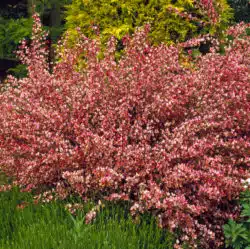
When spring arrives a bough of blossom is useful and Amelanchier, sometimes known as June berry, cuts very well. Florists bash the end of the stems of this one to allow more water to travel up the stem. Stems should be soaked overnight as well. The white star shaped flowers, delicate in appearance, are highlighted by darkly bronzed foliage. Abelia grandiflora, very underused in gardens, provides late summer and autumn flower. Abelia x grandiflora has pink stems clothed in dark-green foliage, with white flowers cradled in red buds.

I’m a lifelong organic gardener and, I always say, it’s for all the wrong reasons. I grew up in the early, cash-strapped 1950s, when gardens were not exposed to a barrage of chemicals. There weren’t many products to buy, but most couldn’t afford them anyway because the household budget was strained. My organic mentor was…

As we creep towards the shortest day a certain sort of magic descends. Low light slants through the garden and picks up all the detail of line, texture and silhouette. I noticed this many years ago when I gardened in Hook Norton on Oxfordshire. All the older gardens had the same sturdy giraffe-like cooking apple…

We are one of just a handful of online nurseries to have attained Plant Healthy certification. In a nutshell, it’s a way of proving that we will always do the right thing in preventing the spread of harmful plant pests and diseases. The Plant Healthy Management Standard is a voluntary initiative that sets out requirements…