***HALF PRICE SALE – GET AN EXTRA 10% OFF SALE PRICES THIS WEEK WITH CODE FLASH10***
***HALF PRICE SALE – GET AN EXTRA 10% OFF SALE PRICES THIS WEEK WITH CODE FLASH10***




 https://www.hopesgrovenurseries.co.uk/wp-content/uploads/2026/01/lavender-shutterstock_2325851517-750x500.jpg
Why do we prune and what effect does it have?
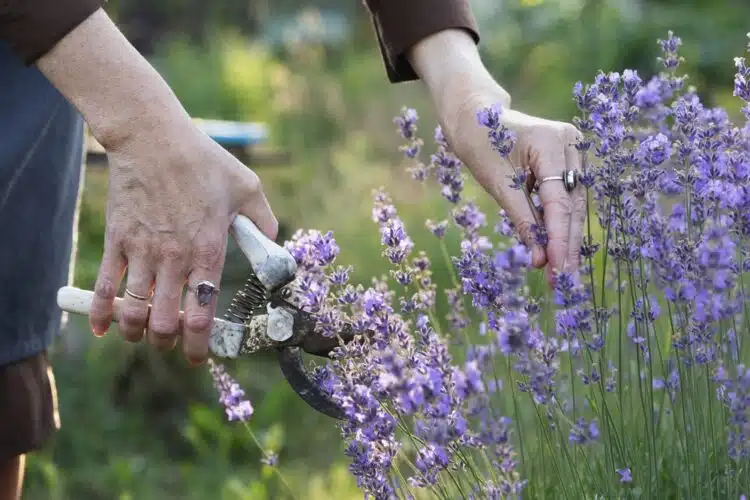
Pruning plants is a necessity for most things you’ll be growing in the garden. It isn’t just about keeping your plants in a crisp and pleasing shape, important though that is. Pruning effects how plants grow. It can work two ways: it can promote growth or subdue it. Apple trees, for instance, are summer pruned in late summer once the flow of sap has slowed down. The fresh pliable tips of the lateral growth, or side shoots, are trimmed back just above the older wood. This process subdues growth and encourages more fruit buds and spurs. Thinning the foliage lets the light in and allows fruit to ripen. Trimming wisteria, after its flowered, has the same effect.
Most pruning practices promote new growth. Winter pruning of apple trees is undertaken when the plant is dormant, usually around the turn of the year. The leaders, the branches that go straight up, can be seen easily once the leaves have fallen. The new paler shinier growth is reduced so that it’s just above the old wood. Lopping the leaders in winter discourages apical dominance – a posh term for growing straight up towards the sky. Once spring arrives, the side shoots spurt into growth. If the apple tree wasn’t pruned, you’d get less fruit and it would all be at the top.
Pruning’s a healthy thing
A good pruning regime helps prevent disease, because you have a chance to remove any wood that’s dying or dead, or any wood that looks diseased. The process also lengthens the plant’s life and keeps it vigorous. If you didn’t prune your plants, most would become leggy and tired and then they’d lose vigour before fading away. The weather should be clement, not bitterly cold, and the clippers, secateus and pruners need to be sharp so the cuts are clean and crisp.
Pruning’s a Must for English Lavender – because it extends its lifespan
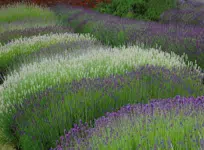
English lavender, Lavandula angustifolia, is compact and very hardy so it’s ideal for hedges in sunny positions. You can identify an English lavender by its shorter stems, which go straight up, without splaying and radiating outwards. The short flower spike is blunt-tipped at the top and does not taper to a point. The flowers appear in the first half of summer, often when the roses begin to flower.
Specially Adapted Foliage
English lavender copes with our warming climate really well because of its Mediterranean provenance. The oily, aromatic coating on the foliage is an effective sunscreen and all pungent plants can tolerate lots of sunshine. The needle-like foliage cuts down transpiration, because there’s little surface for water to escape. The pale silvery foliage also helps, because it does not absorb much heat. The flowers of aromatic plants contain concentrated nectar.
You will need to water until established
Mediterranean plants, including lavenders, are adapted to dry summers. They search out water by developing a vertical root system that can go several feet underground. Newly planted lavenders haven’t had enough time to develop deep roots, so they will need watering in their first growing season.
When to Prune English Lavender
In their native land hot, dry Mediterranean summers don’t encourage much growth. However, the Mediterranean climate produces warm, wet winters and this is when the growth spurt occurs. We have to encourage an earlier surge of growth, because our winters are much colder, so English lavenders need to cut back in late summer – before cold weather sets in. This late-summer prune encourages a dome of new foliage to develop by early autumn and this dense foliage protects the plant in cold weather. In severe winters this dome of foliage may get shabby, so you may need another trim in late spring. Wait until the fear of cold weather has passed. April’s normally the best time, if you need to tidy it up again.
English lavender, Lavanula angustifolia, can be cut back in different ways. A lavender hedge can be reduced to nine inches or 23cm, using shears or hedge trimmers, in late summer. Individual plants can be cut back harder in late summer, to four inches, or 10cm. If you prune regularly every year, English lavender will live for over twenty years and possibly even longer. If you leave it untended, you’ll only get five years because the plant will lose vigour.
The two hedging varieties on offer are the dark-blue ‘Hidcote’ and the paler mauve ‘Munstead’. This plant was grown by the famous lady gardener, Gertrude Jekyll (1843 -1931), who gardened at Munstead Wood in West Surrey. This English is a soft, muted violet and the foliage is a deeper grey than most. The origin is unknown, but Gertrude Jekyll’s painterly eye admired its soft colour. Her plant was included in Barr’s nursery catalogue of 1902 as ‘Munstead’.
‘Hidcote’, the other choice for a low and upright hedge, has vibrant purple flowers and very aromatic grey-green leaves. It’s really eye-catching in June and it makes a superb hedge too. It may be named after the National Trust’s Hidcote Manor in Gloucestershire, but it has French connections. Major Lawrence Johnston (1871 -1958) owned Hidcote Manor until he died. He hated British winters. Well, don’t we all! This man of means took himself off the south of France during the winter and one year, during the 1920s, he came back with this vibrant lavender. Cuttings were passed to the well-connected nursery man Thomas Carlile, owner the Loddon Nursery near Twyford in Berkshire.
‘Hidcote’ became widely grown and known after 1949 and one of its greatest admirers was Vita Sackville-West, the creator of Sissinghurst Castle Garden in Kent. She visited Hidcote and saw it tumbling out of a dry wall in 1949 and wrote about its deep-purple flowers. ‘Hidcote’ and ‘Munstead’ both flower in early June. If you want to dry the flowers, pick them when fresh and hang them upside down. The pink and white English lavenders are not as vigorous or as hardy.
Billowing Hybrid Lavendins – need a gentler prune
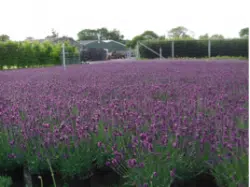
Later flowering lavenders are hybrids between L. angustifolia and the less hardy L. lanata. They are known as lavendins and many are commercially grown in fields for their fragrant oil, particularly in the fields of Provence. Lavendins flower in July and August and the slender tapering flowers are held on splayed out stems, so they are less compact. They are less hardy too, so they need a gentler pruning regime. Just shape them slightly in September by cutting into the foliage. They form rounded mounds and these can look extremely handsome in winter light. They make good specimens on the edge of sunny borders, or in paving, and the tapering flowerheads please the bees. Santolina or cotton lavender, can also be shaped in September. Don’t prune hard in autumn. If your lavendin or santolina needs a radical prune, tackle it in April. If the bush is very leggy and old, tackle half of it at a time. If that half doesn’t recover, it’s time to dig it up!
The hardiest lavandin, ‘Provence Blue’, was raised in Canada in the 1950s and it’s more tolerant of our damp, cool winters. This is a garden variety only, because it doesn’t produce viable oil. It’s also more erect than most lavendins, so this one could be used as a hedge. Lavendins are not as long lived as English lavender, usually lasting 10 years on average, but they are very flower-packed.
The classic commercially grown lavandin for oil production is ‘Grosso’, a purple-flowered form with greener foliage, rather than the usual grey. The first plants were discovered by farmer M. Pierre Grosso in 1972, in his fields at Goult near Apt in the Luberon district of France. He had been growing lavandins since 1931, so he knew that they were distinctly different. M. Grosso took cuttings and soon realised that the plants were both vigorous and hardy. The oil from the flowers was more pungent, but the yield was higher. By the 1980s 55% of the lavandin crop consisted of ‘Grosso’. Today, it’s the most widely grown field variety for lavender oil in the world, so thank you M. Grosso!
Most of Grosso’s oil is used in potpourri or in detergents, but the bright-purple flowers dry really well and it’s a robust performer in the garden setting. It’s more colourful than most lavandins and it’s slightly later into flower, so it always looks tremendous at the end of August.
The least hardy lavenders of all have tufted petals that wave above the flower head. These are no-prune lavenders may last five years, before losing vigour. Always remove the spent flowers in autumn, because they can suffer from botrytis. These need hot spots in the garden, or you can grow them in pots. They are the first to flower and their flag-like petals are very exuberant.
I’m a lifelong organic gardener and, I always say, it’s for all the wrong reasons. I grew up in the early, cash-strapped 1950s, when gardens were not exposed to a barrage of chemicals. There weren’t many products to buy, but most couldn’t afford them anyway because the household budget was strained. My organic mentor was…
As we creep towards the shortest day a certain sort of magic descends. Low light slants through the garden and picks up all the detail of line, texture and silhouette. I noticed this many years ago when I gardened in Hook Norton on Oxfordshire. All the older gardens had the same sturdy giraffe-like cooking apple…

We are one of just a handful of online nurseries to have attained Plant Healthy certification. In a nutshell, it’s a way of proving that we will always do the right thing in preventing the spread of harmful plant pests and diseases. The Plant Healthy Management Standard is a voluntary initiative that sets out requirements…